

Infections and inflammatory conditions of the spleen
Conditions in this group
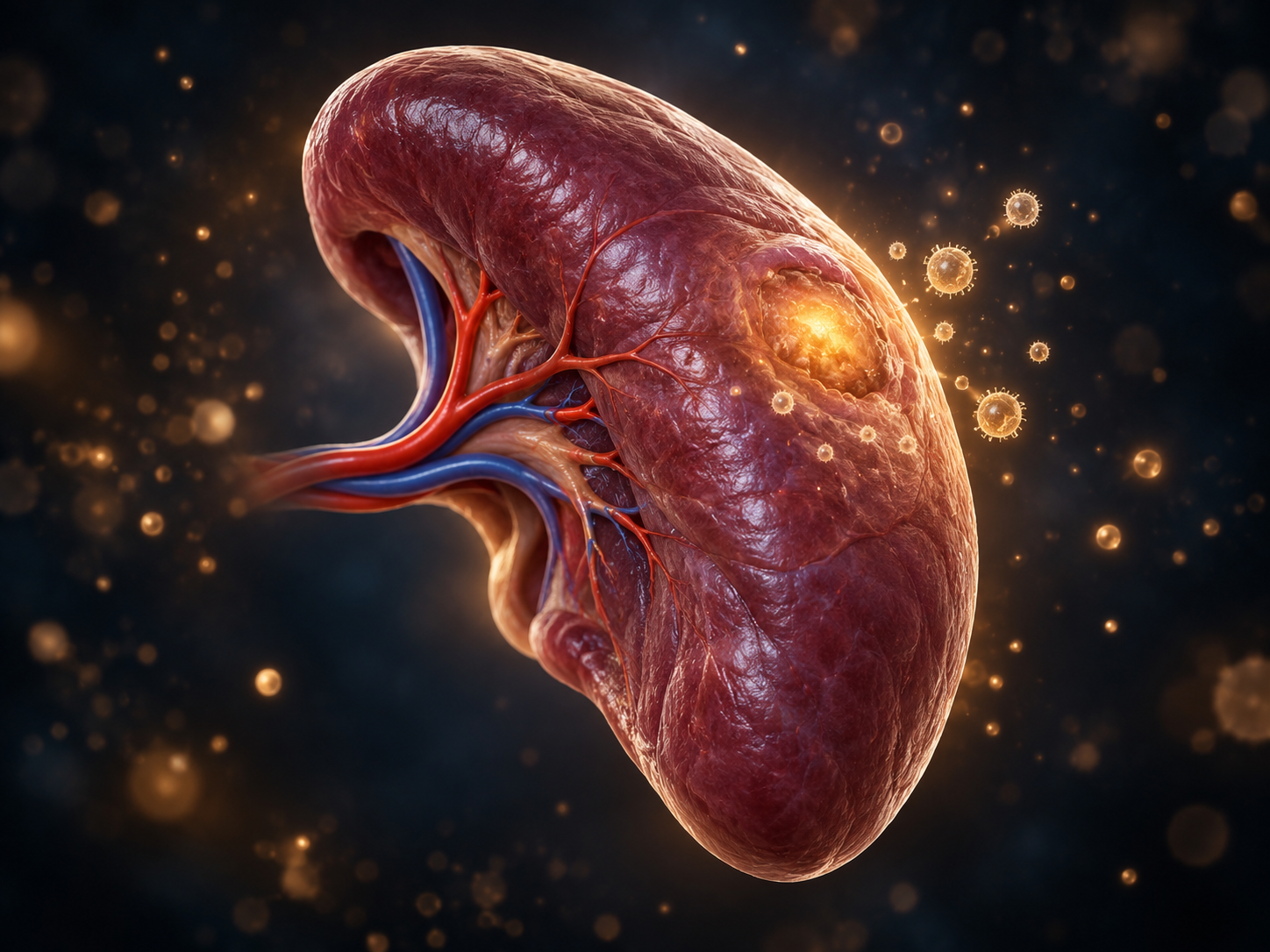
This group includes splenic abscess, multiple splenic abscesses, splenic candidiasis, splenic tuberculosis, and splenic involvement by sarcoidosis. The most common condition with a direct surgical relevance is splenic abscess.
How they develop and how they are diagnosed
An abscess may develop when microorganisms reach the spleen through the bloodstream, after bacteremia or infective endocarditis. Other risk factors include immunosuppression, diabetes mellitus, malignancy, recent trauma, or splenic infarction. Fever, chills, malaise, and pain in the upper left abdomen are characteristic but not always present. Blood tests and cultures support the diagnosis. CT is the most important imaging examination for localization and treatment planning.
Treatment
Treatment begins with targeted antimicrobial therapy. Depending on the size, number, and location of the abscesses, image-guided percutaneous drainage may be needed. Splenectomy is considered when safe drainage is not possible, when infection is not controlled, or when there is rupture or extensive destruction of the organ. In sarcoidosis, surgical treatment is rare and is mainly limited to diagnostic uncertainty or severe symptoms.
Frequently asked questions
Is a splenic abscess urgent?
Yes. Fever and abdominal pain in a patient with risk factors require prompt assessment.
Are antibiotics enough?
They may be enough for some small or selected collections, but drainage or surgical treatment is often required.
Why is the source of infection investigated?
Treatment must address not only the abscess but also the cause that led to the spread of microorganisms to the spleen.
