

Splenic cysts and parasitic conditions
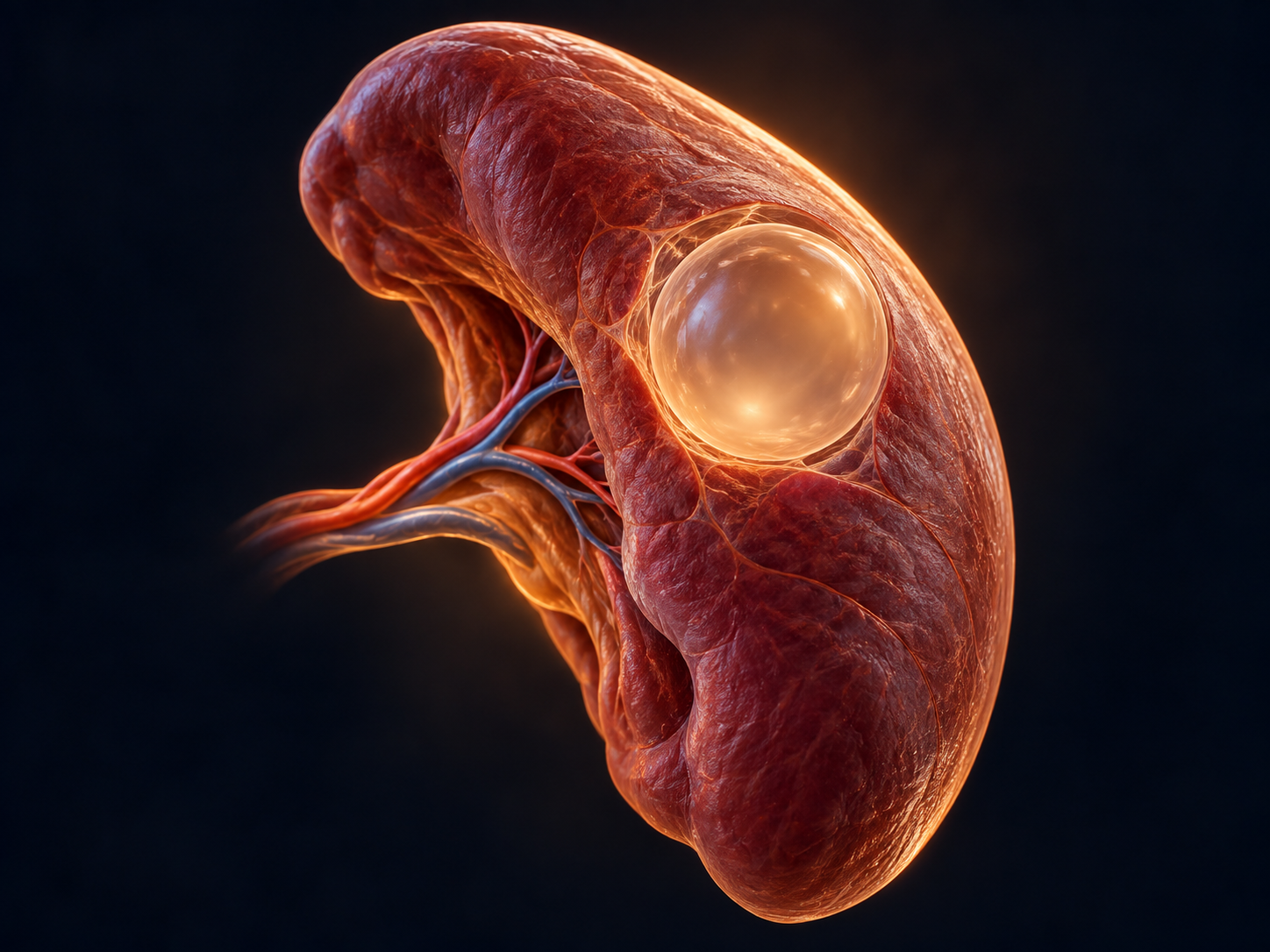
How they develop
Splenic cysts are fluid-filled cavities. They may be congenital or true cysts, post-traumatic pseudocysts after an old hematoma, or parasitic cysts due to echinococcosis. Many are found incidentally on ultrasound or CT.
Symptoms and diagnosis
Small cysts usually cause no symptoms. Larger cysts can cause pain or heaviness in the left upper abdomen, early satiety, nausea, or a sensation of pressure. Rare complications include bleeding, infection, and rupture. Ultrasound, CT, and MRI help define the size, wall, and any septa or solid components. When there is epidemiological suspicion, targeted testing for echinococcosis is performed before any invasive procedure.
Treatment
Simple, small, asymptomatic cysts are usually observed. Surgical management is considered for large, symptomatic, enlarging, or complicated cysts, and when the diagnosis is not secure. Options include cyst excision, partial splenectomy, or total splenectomy. In echinococcosis, planning is specialized and may include antiparasitic medication and surgery.
Frequently asked questions
Is every cyst dangerous?
No. Most are benign and are monitored. Their significance is determined by the imaging appearance, size, and symptoms.
Does the spleen always need to be removed?
No. When technically safe, preservation of functioning splenic tissue is pursued.
Can the cyst simply be drained?
In selected cases, drainage may have a role, but it is not suitable for all cysts and recurrence may occur.
