

Splenic trauma and rupture
How it develops
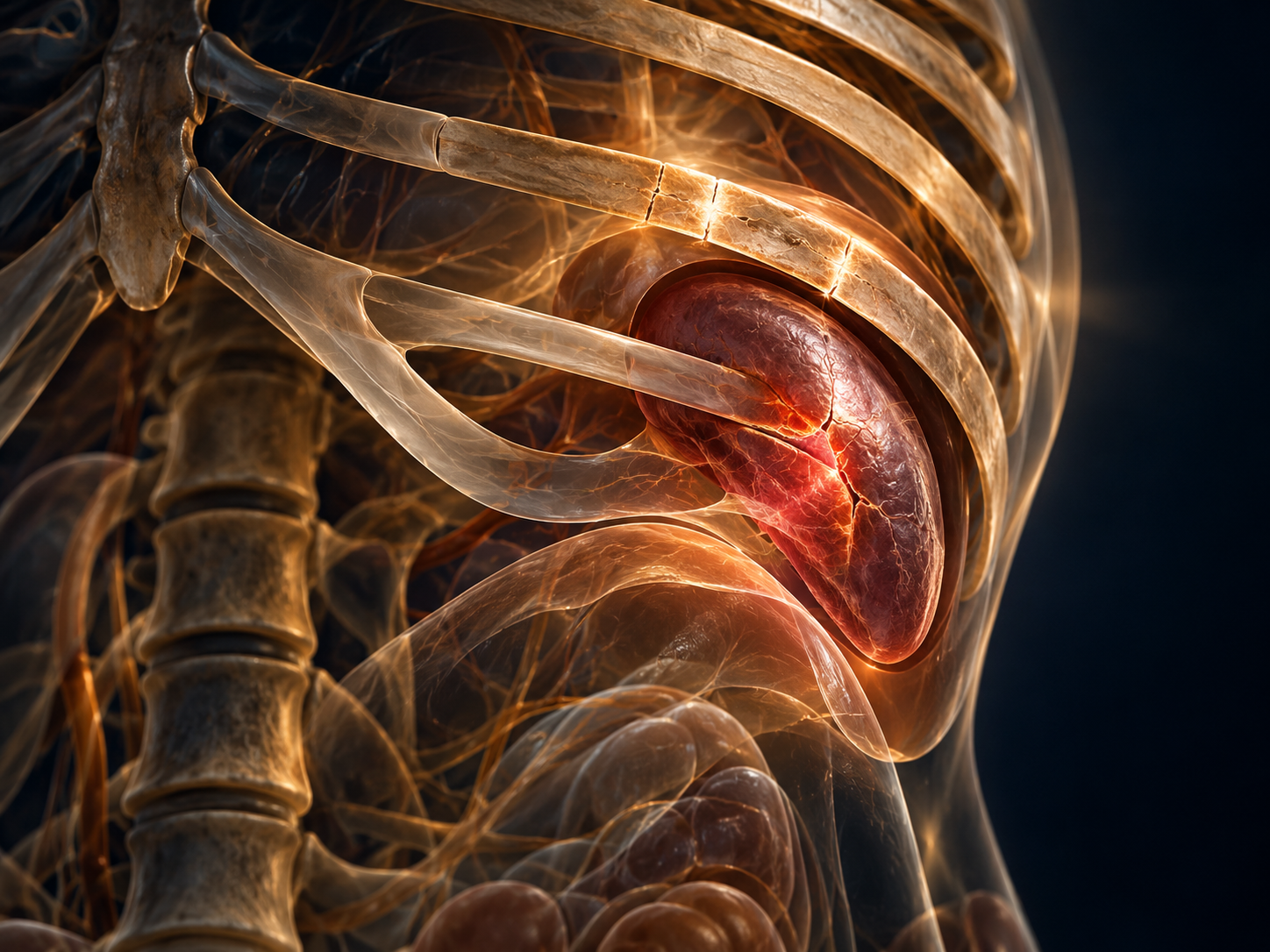
Splenic trauma occurs most often after a road traffic accident, fall, sporting injury, or a strong impact to the upper left abdomen or left ribs. It can range from a minor injury to a deep rupture with bleeding into the abdomen. More rarely, rupture can occur without obvious trauma when the spleen is significantly enlarged, for example in an infectious or hematological condition.
Symptoms
Pain in the upper left abdomen, tenderness beneath the left ribs, and pain referred to the left shoulder are common symptoms. Dizziness, weakness, faintness, rapid heart rate, pallor, or low blood pressure may indicate significant internal bleeding.
Diagnosis and treatment
Immediate clinical assessment and monitoring of vital signs are essential. In hemodynamically stable patients, contrast-enhanced CT assesses the severity of the injury, active bleeding, and possible associated injuries. In emergency situations, FAST ultrasound may be used.
Many stable patients are managed without an operation, with admission, clinical monitoring, repeat blood tests, and imaging when needed. If CT shows active bleeding or a pseudoaneurysm, angiography and splenic artery embolization may be performed. Emergency surgery, often splenectomy, is required when there is hemodynamic instability or uncontrolled bleeding.
Frequently asked questions
Can the injury be managed without surgery?
Yes, provided that the patient is stable and the injury allows it. The decision is based on the overall condition, CT findings, and the ability to provide close monitoring.
When can I return to exercise?
Return is gradual and only with medical advice. Timing depends on the severity of the injury and the course of follow-up investigations.
Which symptoms after discharge are urgent?
Worsening pain, dizziness, fainting, rapid heart rate, fever, or new weakness require urgent assessment.
