

Splenomegaly and hypersplenism
What is the difference?
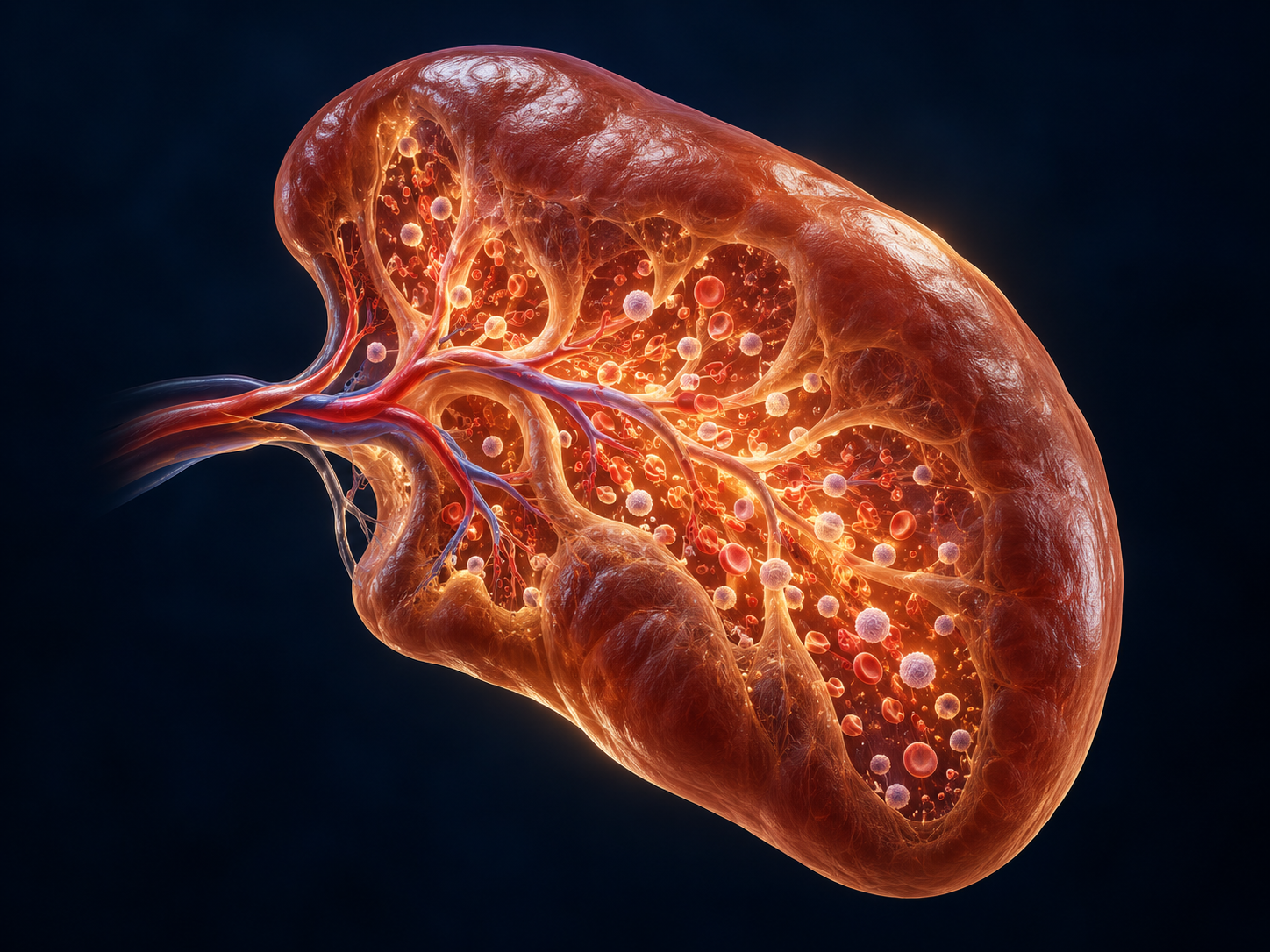
Splenomegaly means that the spleen is larger than normal. Hypersplenism means that the spleen retains or removes blood cells excessively, resulting in low platelets, red blood cells, or white blood cells. The two conditions often coexist, but they are not the same.
How they develop and how they are diagnosed
Liver disease with portal hypertension, hematological disorders, infections, autoimmune diseases, and some malignancies can cause splenomegaly. A patient may have no symptoms or may report heaviness in the upper left abdomen and early satiety. With hypersplenism, fatigue, easy bruising, or bleeding may occur, depending on the cytopenias.
Assessment includes clinical examination, full blood count, liver tests, targeted hematology tests, and ultrasound or CT. The aim is to identify the cause and assess whether splenic function is producing clinically significant cytopenias.
Treatment
Treatment primarily focuses on the underlying cause. Splenectomy is not usually the first option, but may be discussed when hypersplenism causes important problems or for specific hematological indications. Appropriate vaccinations and prevention of thrombosis and infection are arranged for all candidates for elective splenectomy.
Frequently asked questions
Does splenomegaly mean hypersplenism?
No. Splenomegaly is an increase in size, whereas hypersplenism is the functional effect on blood cells.
Should I avoid contact sports?
With significant splenomegaly, avoiding abdominal injury is often advised until individualized guidance is given.
When is splenectomy needed?
When there is a specific and important indication, after assessment of the cause and alternative treatments.
