

Intestinal stomas and stoma reversal
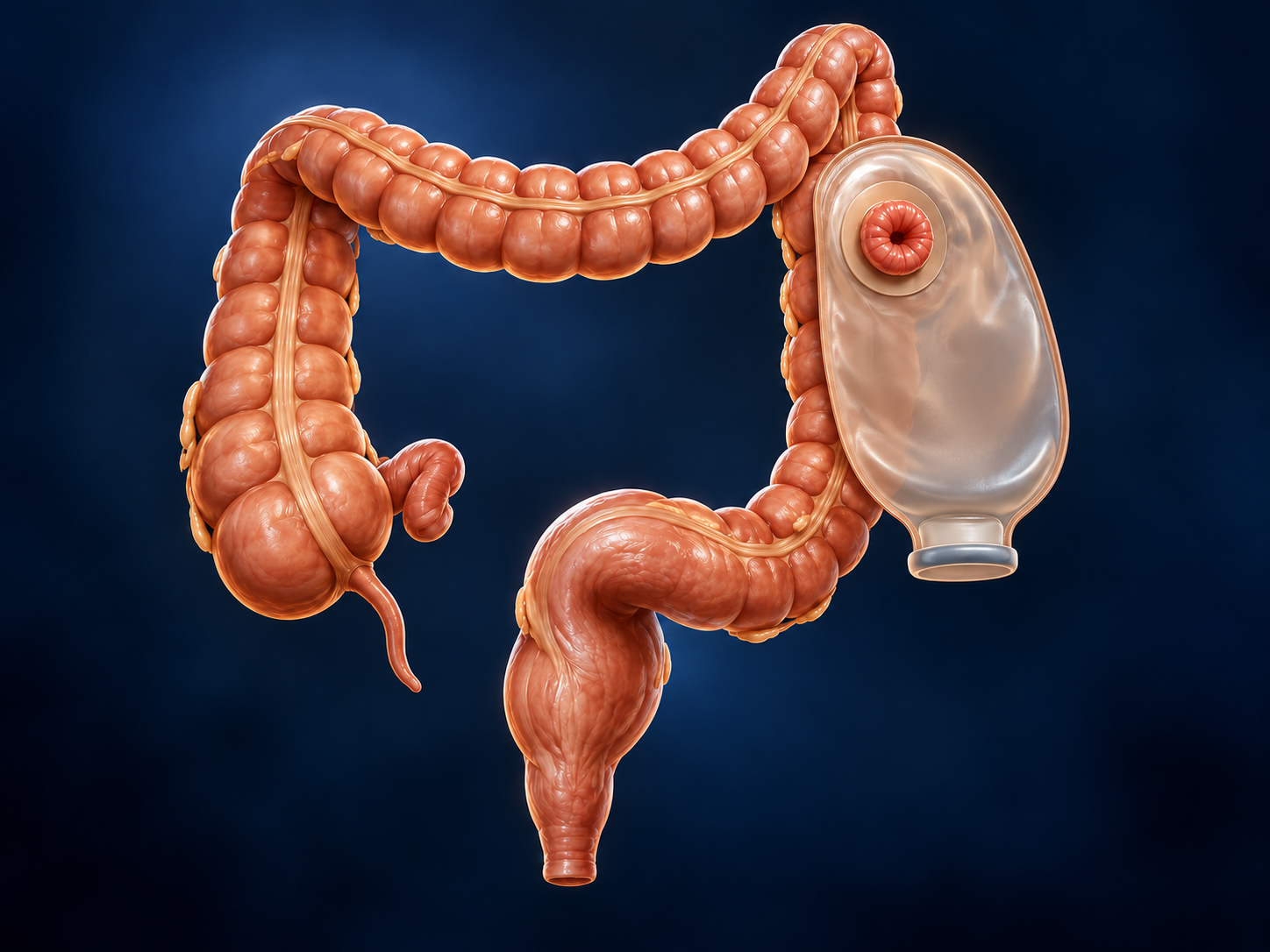
A stoma is a surgically created opening of the bowel on the abdominal wall through which stool is collected in a specialized pouch. It may be temporary or permanent. It is created when the safest option is to divert a section of bowel or when the normal route of stool cannot be restored.
Having a stoma does not mean that an operation has failed. It is often an important protective measure that allows safer healing or treatment of a serious disease.
How and why a stoma is created
An ileostomy is formed from the small bowel and usually has more liquid output and functions more frequently. A colostomy is formed from the large bowel and its output is usually more formed. Both may be end stomas or loop stomas, depending on how the bowel is fashioned.
A temporary stoma may be created to protect a low anastomosis after rectal surgery, to allow healing after a leak or severe inflammation, or to manage obstruction and sepsis. A permanent stoma may be needed when the anus or the final part of the rectum has been removed, when the bowel cannot be safely reconnected, or in selected complex cancer cases.
Living with a stoma
With appropriate education and support, most patients return to an active daily life, work, travel, and exercise. The stoma should be pink or red, moist, and usually painless to touch. A small amount of bleeding during cleaning is normal because it has a rich blood supply.
The stoma nurse guides the patient in applying the appropriate pouch, protecting the skin, and adapting the diet. Particularly after an ileostomy, adequate intake of fluids and salt is important because fluid loss may be increased.
Complications that need assessment
Early complications may include ischemia or necrosis of the stoma, bleeding, retraction of the stoma toward the abdominal wall, separation of the skin from the bowel, and obstruction. Later, skin irritation or breakdown, leakage from an unsuitable pouch fit, stoma prolapse, stenosis, parastomal hernia, or high ileostomy output may occur.
Prolapse means that the bowel protrudes more than expected. A parastomal hernia causes a bulge next to the stoma. Many complications are initially managed conservatively with specialized care, a change of pouching system, dietary adjustments, or a support garment. Surgical correction is needed when there are significant symptoms, obstruction, ischemia, recurrent leakage, or inability to use the stoma safely.
Stoma reversal
Reversal is the operation that restores continuity of the bowel so that stool returns to its normal route. Not every stoma can be reversed. Before reversal is decided, the reason the stoma was created, healing of the anastomosis or rectum, absence of active disease or infection, sphincter function, and the patient's general condition are assessed.
Assessment may include CT, endoscopy, or a specialized contrast examination of the anastomosis. The timing of reversal is individualized. It is often planned after full recovery and, when cancer is present, in coordination with oncological treatment.
Reversal is usually performed through the stoma site, but previous operations, adhesions, or complex anatomy may require a laparoscopic, robotic, or open approach. After reversal, the bowel needs time to adapt. Increased stool frequency, urgency, and variation in stool consistency are common, particularly after low rectal surgery.
Frequently asked questions
Is my stoma temporary?
This depends on why it was created and on the plan for the original operation. The surgeon discusses from the outset whether the aim is temporary protection or permanent diversion.
When can reversal be performed?
When the bowel has healed safely, there is no active infection or leak, and the patient is well enough for a second operation. There is no single timetable for everyone.
Can I eat normally with a stoma?
In most cases, yes. The diet is expanded gradually after surgery. Some foods may affect gas, odor, or the liquidity of the output, particularly with an ileostomy.
When is high ileostomy output concerning?
Persistently very liquid and increased output, thirst, reduced urine output, dizziness, weakness, or cramps may indicate dehydration or an electrolyte disturbance and require timely contact with the medical team.
When should I seek urgent help?
Urgent assessment is needed if the stoma becomes dark purple, gray, or black; if there is severe pain, significant bleeding, fever, persistent vomiting, complete cessation of output with abdominal distension, or marked dehydration.
Will bowel function be normal after reversal?
It usually improves progressively, but this may take time. Final function depends on the segment of bowel removed, the distance of the anastomosis from the anus, previous radiotherapy, and overall bowel function before surgery.
Can I exercise or travel with a stoma?
Yes, after recovery and with appropriate advice. A gradual return to activity and good planning for supplies and fluids are usually needed, particularly when traveling.
This information is general and does not replace individualized medical assessment.
